
Quick answer: a keffiyeh (also spelled kufiya) is a square cloth traditionally worn on the head in the Middle East. The keffiyeh meaning today depends on who is wearing it: for Palestinians it is a symbol of identity and heritage, and for many people worldwide it is a sign of solidarity with Palestinians.
This guide explains what a keffiyeh is, where it comes from, how it became a Palestinian symbol and what the pattern is said to mean. We have kept to what is widely documented, and we say where the history is uncertain.
What is a keffiyeh?
A keffiyeh is a square piece of cloth, usually folded into a triangle and worn on the head or around the neck. It protects against sun, dust and wind, and it has been part of everyday dress in the region for generations.
The same cloth has several names. Keffiyeh and kufiya are the most common in English. In the Levant it is often called a hatta, in the Gulf a ghutra, and in English-speaking countries it is sometimes called a shemagh. The cord ring worn on top to hold it in place is called an agal.
Where does the keffiyeh come from?
Head cloths for sun and dust protection have been worn in the Middle East for centuries. Beyond that, the exact origin of the keffiyeh is uncertain. Some people trace head cloths back to ancient Mesopotamia, but historians do not agree on a single, direct line from those ancient cloths to the keffiyeh we know today, and even the origin of the word is debated. It is safest to say it is a long-standing regional garment rather than to name a date.
What is well documented is that in Palestine it was worn for generations by farmers and villagers as everyday protection from the sun.
Timeline: how the keffiyeh became a Palestinian symbol
| Period | What happened |
|---|---|
| For generations | Farmers and villagers in Palestine wear the keffiyeh as everyday sun and dust protection. |
| 1936 to 1939 | During the Arab Revolt against British rule in Mandatory Palestine, rebel leaders call on Arabs to wear the keffiyeh. Reports from the time describe it as widely adopted. |
| After the revolt | Many people return to other headwear, so the keffiyeh does not yet become the everyday national symbol it is today. |
| The 1960s | As the Palestinian national movement grows, the black-and-white keffiyeh becomes more prominent. Yasser Arafat wears it throughout his public life. |
| Today | The keffiyeh is recognized around the world, and many people wear it as a sign of solidarity with Palestinians. |
The 1936 to 1939 revolt
The Arab Revolt is the first moment when the keffiyeh took on a clear political meaning. Rebel leaders called on Arabs to wear it, which helped fighters blend in with the wider population and made them harder to identify. It marked a shift from a practical garment to a shared sign of belonging.
Yasser Arafat and the 1960s
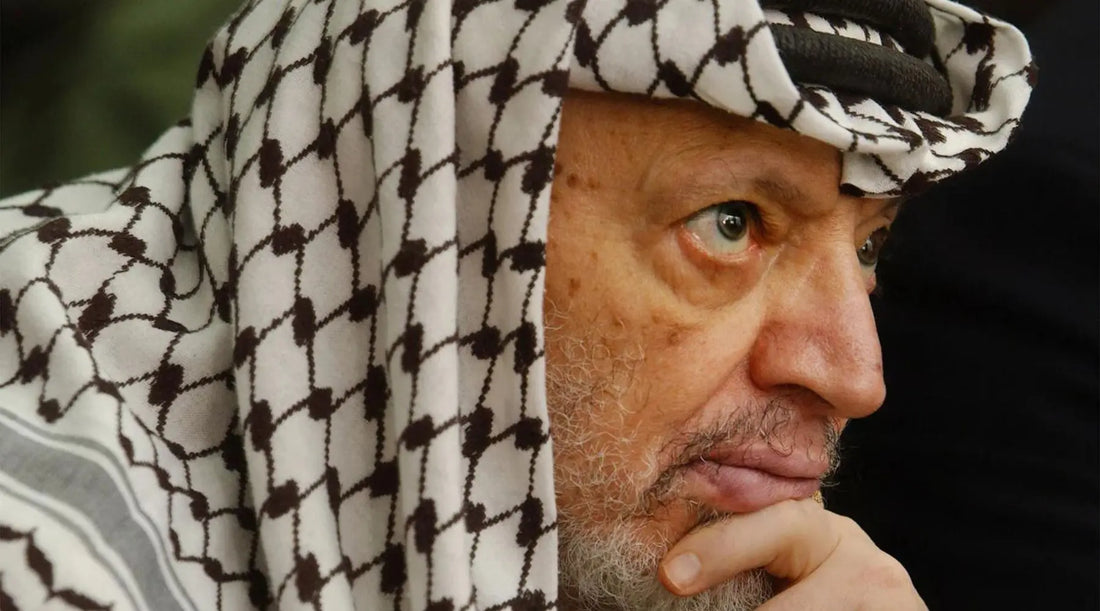
The black-and-white keffiyeh grew more prominent in the 1960s as the Palestinian national movement developed. Yasser Arafat adopted it and wore it throughout his public life, and his image is one of the main reasons the scarf became linked to Palestinian national identity around the world.
Keffiyeh meaning: what it stands for today
There is no single meaning. For many Palestinians, the keffiyeh stands for heritage, belonging and steadfastness. For many people elsewhere, it stands for solidarity and support. Others wear it simply as a warm, practical scarf. Because it carries real history, many wearers like to know the background first.
What does the keffiyeh pattern mean?
The black-and-white pattern is usually explained as three parts: a fishnet design, said to represent fishing and the Mediterranean Sea; curved lines said to represent olive trees; and bold lines said to represent trade routes. These are traditional interpretations that are widely repeated, not documented facts, and other explanations exist.
Black and white or red and white?
The black-and-white keffiyeh is the one most associated with Palestinians. The red-and-white version is widely associated with Jordan, where it is a national symbol. Both are the same type of cloth in different colors.
Claims you may see online, and how reliable they are
The keffiyeh is the subject of many retellings, and some of them are stated with more certainty than the evidence allows. We have deliberately left these out of this guide:
- Exact ancient dates and rulers. Stories that tie the keffiyeh to a specific ancient date or ruler are not well documented.
- The name coming from the city of Kufa. This is a popular story, but the sources we checked treat it as folk etymology, and the real origin of the word is debated.
- A single official meaning for the pattern. There is none. The explanations above are traditions, not records.
If a source gives a precise date or a single definitive meaning without citing evidence, treat it with caution.
The keffiyeh in fashion
In recent decades, fashion brands have used the keffiyeh pattern, which has sparked debate about commercialization and about respect for what the scarf represents. Many people feel that how and why you wear it matters as much as the cloth itself.
How to wear a keffiyeh with respect
- Learn what it represents before you wear it.
- Do not treat it as only a trend.
- If you want to buy one, choose a seller that is clear about what it sells and where the money goes.
Where to find a keffiyeh
Our Everyday Palestinian Keffiyeh comes in the traditional black-and-white pattern and costs $14.45. Profits from every order go to food aid for families in Gaza. You can browse the full keffiyeh collection as well.
Frequently asked questions
What does the keffiyeh symbolize?
For Palestinians it is a symbol of identity and heritage, and for many people around the world it is a sign of solidarity with Palestinians.
Why is the keffiyeh black and white?
There is no single documented reason. The black-and-white check became the version most linked to Palestinians during the twentieth century.
What does kufiya mean?
Kufiya is the Arabic form of the word keffiyeh. Both refer to the same cloth.
Can anyone wear a keffiyeh?
People all over the world wear it. If you want to wear it respectfully, learn what it represents first.
Where does the word keffiyeh come from?
The origin of the word is debated, and scholars offer several explanations.